



I love learning about how artists, filmmakers, musicians and writers work.
Rarely are two person's creative processes the same, so hearing someone talk about how they work opens up new pathways in my brain to try something new.
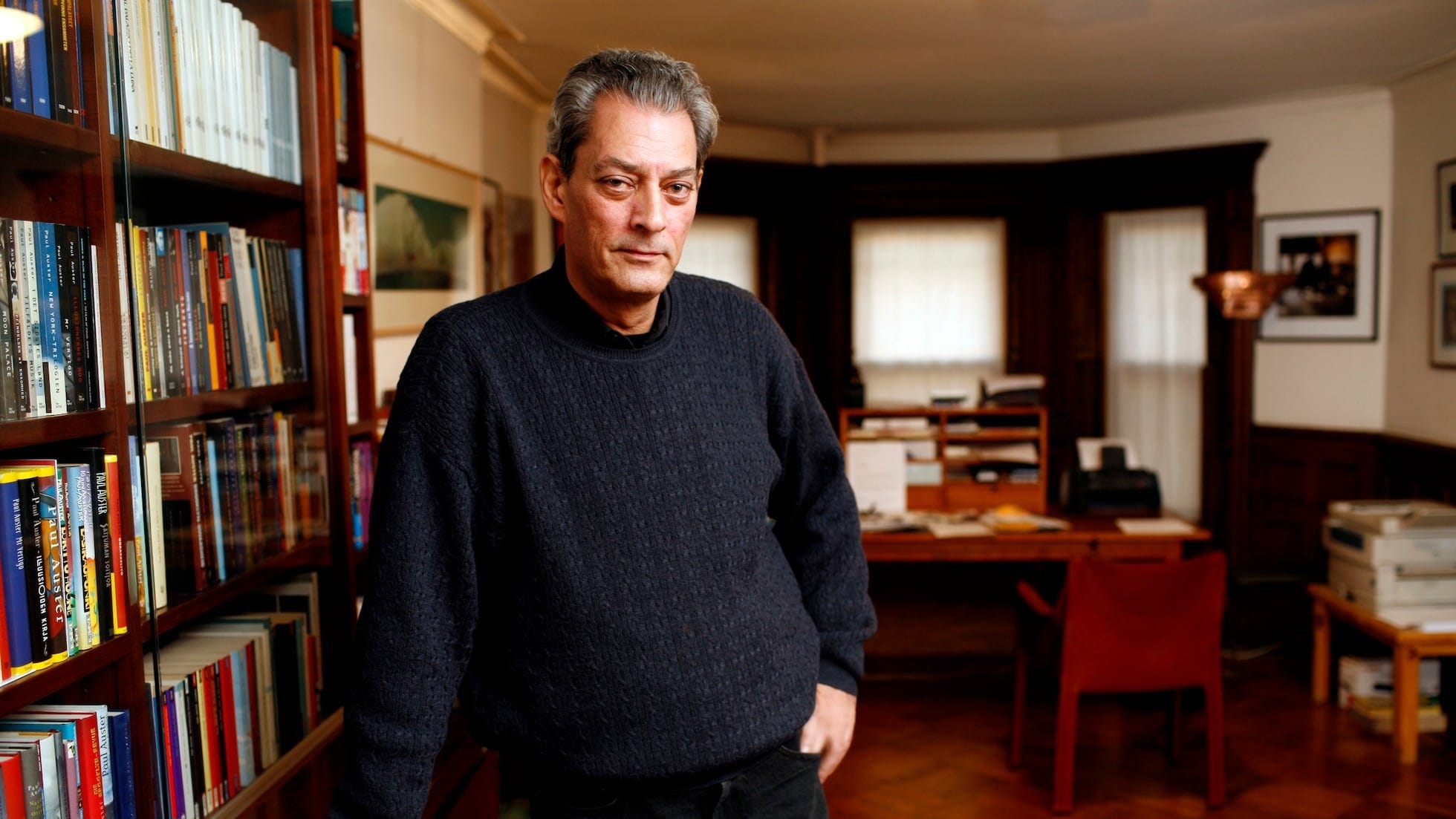
While reading Paul Auster’s New York Trilogy I’m reflecting on his interview with Louisiana Channel in which Auster speaks on his writing process, how language is like music and his thoughts on the artist’s role.
Auster says was 8 years old he met baseball hall-of-famer Willie Mays. Auster asked Mays for an autograph but he didn’t have a pencil or pen so Mays wasn’t able to sign. From then on, Auster always carried a pencil or pen with him.
And that’s how Auster became a writer.
Paul Auster’s tips on how to be a writer:
Observe.
Auster says, “Stories happen to to the people who are able tell to them. Keep your eyes open and you may see something strange or interesting. The job of a writer is to notice things.”
Practice.
Auster estimates he wrote 1000-1500 pages of unfinished novels - his 10,000 hours. Some of that writing made its way into other pieces over the years, Auster says, but most of it remains unpublished. Either way, this practice wasn’t fruitless.
Work slow.
“A good day’s work is one typed page. Two pages is great, three is a miracle.”
Auster describes himself as a slow writer, working paragraph by paragraph, rewriting a passage 10 or 15 times, and aiming to perfect it before moving on. He calls this process “raking the leaves”, until he “gets all the leaves off the lawn, until it looks perfect.”
Write lean.
Books that have holes and spaces which give the reader a break make the reader an active participant. Each word counts so engage your reader with every word. “Take out as much as you can, propel yourself forward.”
Rhythm.
Auster’s goal is to be able to hear the rhythm of the words, when it’s “like music, effortless and smooth”, with the energy he’s looking for.
Auster also moves around a lot while writing which generates thoughts and words. “The music inside the body is language.”
Read carefully.
Auster says people who read novels like newspapers, for the story or the information, do not really listen to the sentences. A book’s style is like music, Auster says, it has tone and rhythm, which carries meaning. “If you’re attuned to it, you’ll get more out of it.”
Engage deeply.
Auster on being an artist: “The essence of being an artist is to confront the thing you’re trying to do, to tackle it head on and if while wrestling with these things you managed to make something good, it will have its own beauty but it’ll be a beauty you can’t predict. All you can do is strive to engage with your material as deeply as you can, even if you’re trying to be funny.”
Give it everything.
Auster says you can’t be a writer, painter, musician unless you try as hard as you can, even if all you did was cross out sentences and throw paper in the trash, at the end of the day you gave it everything you had.
Have you read Auster’s books? How does he use these techniques in his writing?
Until next time,
Keith

I like his habit of perfecting the work paragraph by paragraph. The orthodoxy, frequently spouted on Substack, of "the first draft is supposed to be hot garbage, just get it down then begin revising" is fine for some people but not everyone.