

How To Take Notes On What You Read
Three steps to turn your book notes into essays.


Hi Friends -
A reader recently asked me about how I take notes on books I’m reading.
When I wrote about two books I read on Shackleton’s Endurance expedition, I reviewed what I’d learned, took notes, and shaped my notes into an essay. I did this using the same note-taking system I’ve been using since college.
Below is my three step process for turning your book notes into essays.
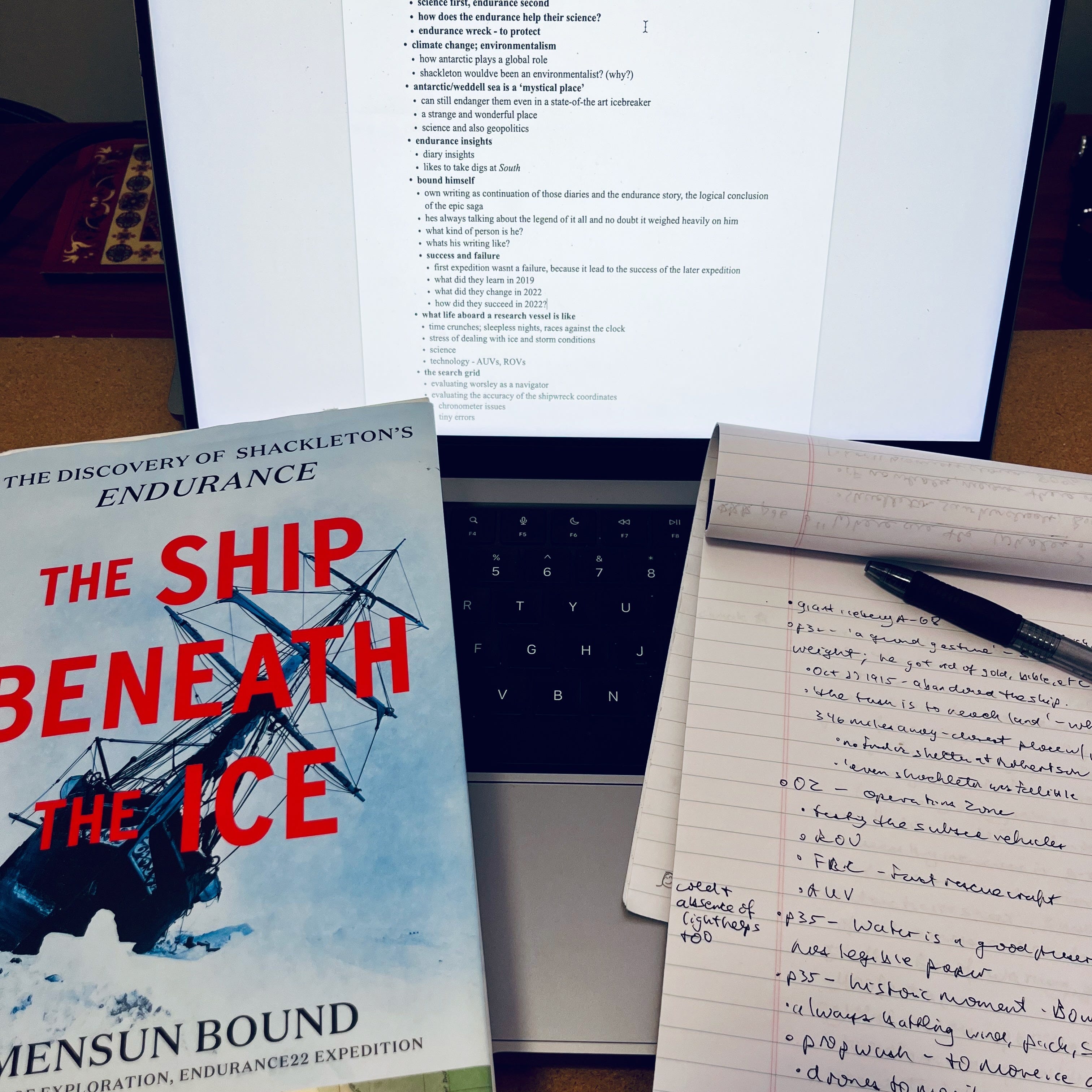
Step One: Marginalia
Take notes while you read. Take notes in the margins, underline or highlight text in the book, and dog-ear pages. I also use index card or a notebook.
This is the most important stage because if I don’t take notes while reading, I’ll probably have to read it again.
Step Two: Notes
Start converting your marginalia, underlined text and dog-eared pages into notes. Write them in a notebook, or type them into a Word document.
When you’ve finished going through the book, your notes will contain important quotes, bullets and outlines of chapters plus your own thoughts and takeaways.
After I finish reading I like to write a few paragraphs about the book, my impressions, and what I’ve learned. This helps me put what I’ve learned into my own words, which will become the basis of an essay.


Step Three: Writing
You’ve read the book and organized your notes. Go back over your notes and find the things that jumped out at you, the things you learned, or were surprised by. What do you want to share about the book? What do you want to teach others? What can you add to the conversation? Here you’ll begin the crucial step of shaping your notes, thoughts, and takeaways on the book into an essay.
After I’ve typed my notes I review them by highlighting the most essential information. Those main points form the outline of my essay. All that remains now is shaping that information into something worth reading.
Read the posts I wrote using this three-step process:


Tips from some of my favorite note-takers:
Goia says that being an attentive reader and learning to write a ‘coherent summary and assessment’ on any topic helped him learn something even if the information wasn’t useful until years later.
Noted: Examining the notes of writers, thinkers, artists & more
If Noted has taught me anything it’s that everyone’s system is different and that I should use whatever system works best for me.
Ryan Holiday’s notecard system
Stoic-author Ryan Holiday marks up a book while reading then goes back and puts his notes onto index cards to be filed by category. When it’s time for him to write a chapter on ‘temperance’, for example, he can refer back to the group of notecards sourced from various books marked with the ‘temperance’ tag.
The best way for me to learn from a book I’ve read is to write about it. With my note-taking process I can break the book into digestible chunks. By writing an essay, I complete the final step of converting the book’s knowledge into my own words, helping me to better understand the information by sharing it with you.
Now it’s your turn: How do you take notes? Let me know what works for you.
Until next time,
Keith
