


Good Morning & Happy Friday!
It’s a beautiful morning here in New York City after some heavy rains yesterday and I’m looking forward to the weekend!
I’m seeing my favorite band Soulive at the Blue Note tonight. I’ve been listening to this band and heading to their shows since I was 17! The band just released a new record. I’ve seen them countless times but they never fail to put on a face-melting performance.
What concerts, events or exhibits are you checking out this summer?
Bullets this week:
Books: I’m just over 100 pages into Herman Melville’s 1851 classic Moby Dick and I can’t put it down. Aside from some outdated language, there’s something about it that makes it seem like Melville could have written it yesterday. His patient, detailed descriptions of everything from Nantucket to the Pequod to Ishmael’s love of the sea really puts me in the novel, more so than a movie possibly could. The book, based on Melville’s own adventures on merchant and whaling ships, didn’t catch on during his lifetime and only reached popularity in 1919.
Music: Music in the Classroom. In this thoughtful post, Eric (my brother, excellent musician, and all-around great dude!) writes about the lessons he learned while student teaching. Eric recently completed a music education degree and will soon be enlightening, encouraging and empowering the next generation of music-makers. Congrats Eric and well done!
NYC: Last weekend I helped the NYC Department of Records and WNYC present 100 Years of WNYC at Photoville Festival’s opening weekend. The exhibit details notable events throughout the radio station’s history. The station was owned and operated by the City of New York from 1927 to 1997 and is now run by New York Public Radio. [More about my work with the NYC Department of Records].
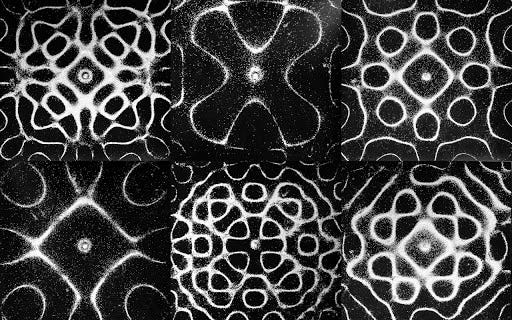
Sound: Cymatics describes the visual patterns produced by sound waves. Physicist Hans Jenny pioneered the field, publishing two books which detailed and photographed the effects of sound on different mediums. Jenny built on the work of Galileo, Robert Hooke and Ernst Chladni who vibrated plates covered in sand to view cymatic patterns. Check out Nigel John Standford’s creative use of Chladni plates to create a song.
Surfing: A Surf Legend’s Long Ride. Now 76, surf legend Jock Sutherland still lives, works and surfs near where he grew up on the North Shore of Oahu. This profile of Sutherland describes him as a ‘vibrant and buzzing’ elder of the surf scene rather than a man lost in his past achievements.
“He is so closely focussed on the waves at any given moment, on the possibilities for joy that they present, that the regret-filled long perspective—the differences between these waves and those he tackled in his prime—seems like a foolish distraction.”
Thanks for reading this newsletter. Subscribe now to stay in touch.
Thanks Keith for sharing my post and for the congratulations on my degree! As usual, my mind has been blown by some of your topics today, especially Jock, the 76 year old surfer (incredible!), and the Nigel John Stanford music video. If that's how music is affecting matter, then it got me thinking, is that what happens in our own bodies when we listen to music or go to a concert? Are our blood cells arranging themselves in geometric shapes? lol. Also, thanks for your work in continuing to be a part of the preservation of NYC history with the Department of Records!